Social Media Action Toolkit
Background
The Journey to Success campaign, along with state and local advocates across the country, are mobilizing to deliver timely reform messages on Capitol Hill. State and local experts have the most knowledge about what’s working and not working, and your voices are the most influential and important to your elected officials.
Objectives
Congressional leaders are stepping up for foster youth. Several bipartisan bills have been introduced in 2026 to improve federal programs that serve youth in foster care. Our advocacy voices are needed to ensure Congress continues to lead this reform agenda and enacts program improvements. Reforms are focused to include:
Strengthening the Chafee and ETV programs
Ensuring continuity of care and support through extended foster care
Promoting educational stability and opportunity for K-12 students in foster care
Targets
State and Local Advocates
Lived Experts
Policy Makers
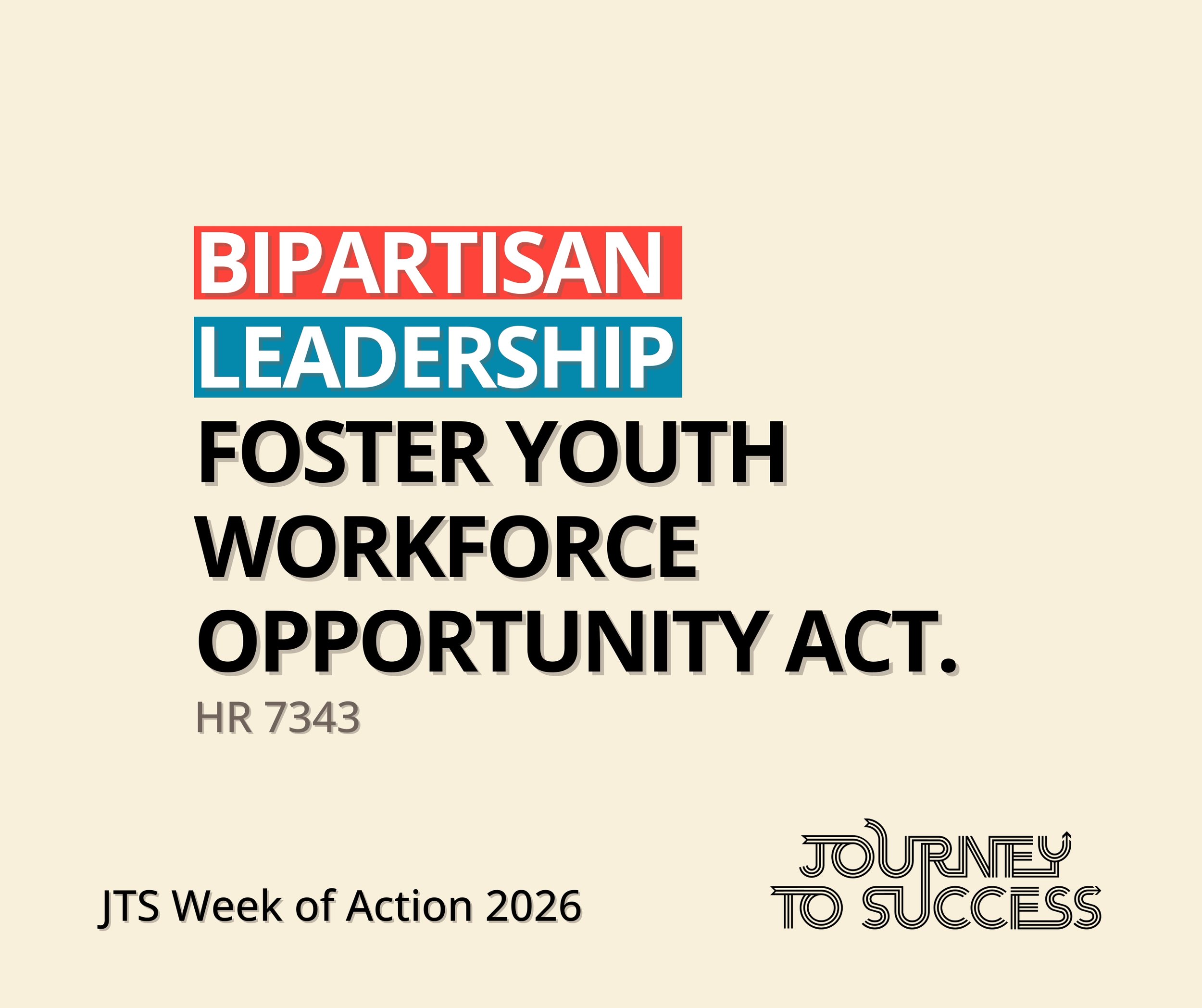
FOSTER YOUTH WORKFORCE OPPORTUNITY ACT
H.R. 7343 – Reps. Miller & Evans
Suggested Captions:
Expanding ETV Means Expanding Career Pathways
CAPTION A: Workforce Flexibility
The Foster Youth Workforce Opportunity Act would expand Education & Training Vouchers (ETVs) to cover short-term workforce programs, apprenticeships, and vocational training.
This bipartisan bill recognizes that apprenticeships and certificates lead to in-demand jobs.
Today’s economy requires flexible training pathways, and ETV should reflect that reality.
CAPTION B: Removing Barriers to Career Pathways
Under current rules, many trade schools and short-term certificates aren’t eligible for ETV support.
Foster youth shouldn’t face unnecessary barriers to workforce training.
Expanding ETV flexibility ensures young people can access the certifications needed for good-paying, in-demand jobs.
CAPTION C: Bipartisan Leadership
Introduced by Reps. Max Miller (R-OH) and Dwight Evans (D-PA), this bipartisan proposal (HR 7343) strengthens practical workforce opportunities.
Expanding access to workforce education is a common-sense, bipartisan step forward.
When Congress works across the aisle, foster youth benefit.
CAPTION D: Economic Mobility
Connecting foster youth to apprenticeships and vocational training sets them up for long-term career success.
Education to employment: this bill helps align federal support with real-world workforce needs.
Expanding ETV means expanding economic mobility.
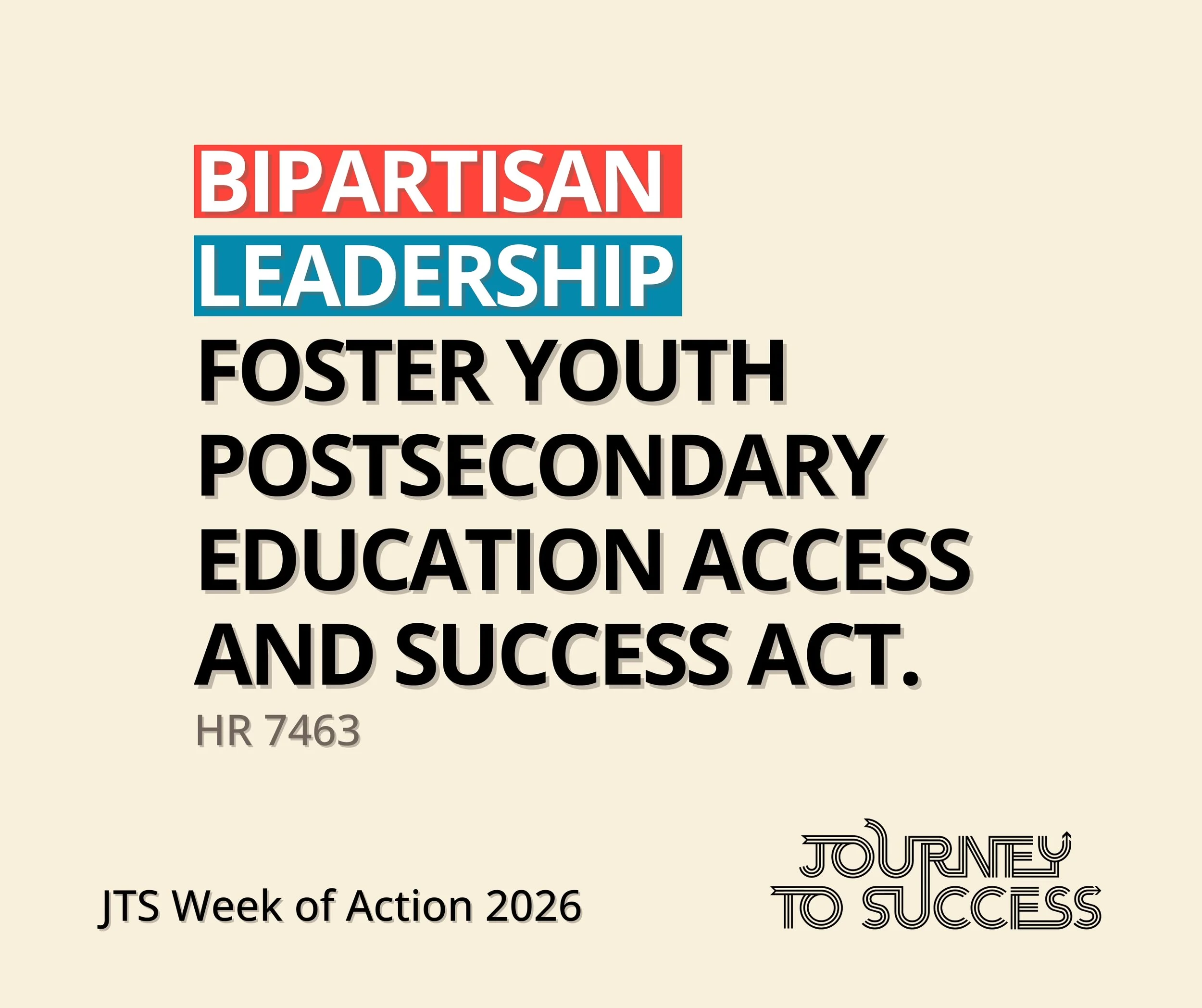
FOSTER YOUTH POSTSECONDARY EDUCATION AND SUCCESS ACT
H.R. 7463 – Reps. Judy Chu (D-CA) & Nathaniel Moran (R-TX)
Suggested Captions:
CAPTION A: Increasing the Value of ETV
The Foster Youth Postsecondary Education Access and Success Act increases the allowable annual Education & Training Voucher (ETV) from $5,000 to $12,000.
The voucher amount has not changed since 2001, even as tuition, housing, and education costs have risen dramatically.
Updating ETV to reflect real costs is a long-overdue step toward ensuring foster youth can afford to complete their education.
CAPTION B: Removing Barriers to Access
Only about one-third of eligible foster youth who attend college receive an ETV.
This bill strengthens outreach and requires states to make reasonable efforts to ensure eligible youth are aware of the program and its benefits.
Expanding awareness and simplifying access helps ensure support reaches the young people Congress intended to serve.
CAPTION C: Simplifying & Modernizing the Application Process
Applying for ETV should not be complicated or confusing.
This legislation requires that the application be simplified, user-tested, easy to understand, and available electronically.
Reducing administrative barriers helps more students stay focused on school — not paperwork.
CAPTION D: Creating a Grace Period for Students
Life happens—especially for young people navigating college without family support.
The bill allows states to establish a grace period for students who temporarily fall short of academic progress requirements.
A grace period gives students the opportunity to get back on track instead of losing critical financial support.
CAPTION E: Centering Youth Voice in Implementation
The bill requires HHS to consult with youth who have experienced foster care when developing guidance for states.
Policies work best when shaped by those directly impacted.
Including youth voice strengthens implementation and accountability.
CAPTION F: Bipartisan Leadership & Practical Reform
Introduced by Reps. Judy Chu (D-CA) and Nathaniel Moran (R-TX), this bipartisan legislation modernizes and strengthens the ETV program.
By increasing voucher value, simplifying access, and improving outreach, the bill addresses real gaps that have held too many foster youth back.
These practical, common-sense reforms help ensure more young people can obtain a degree and pursue their career goals.
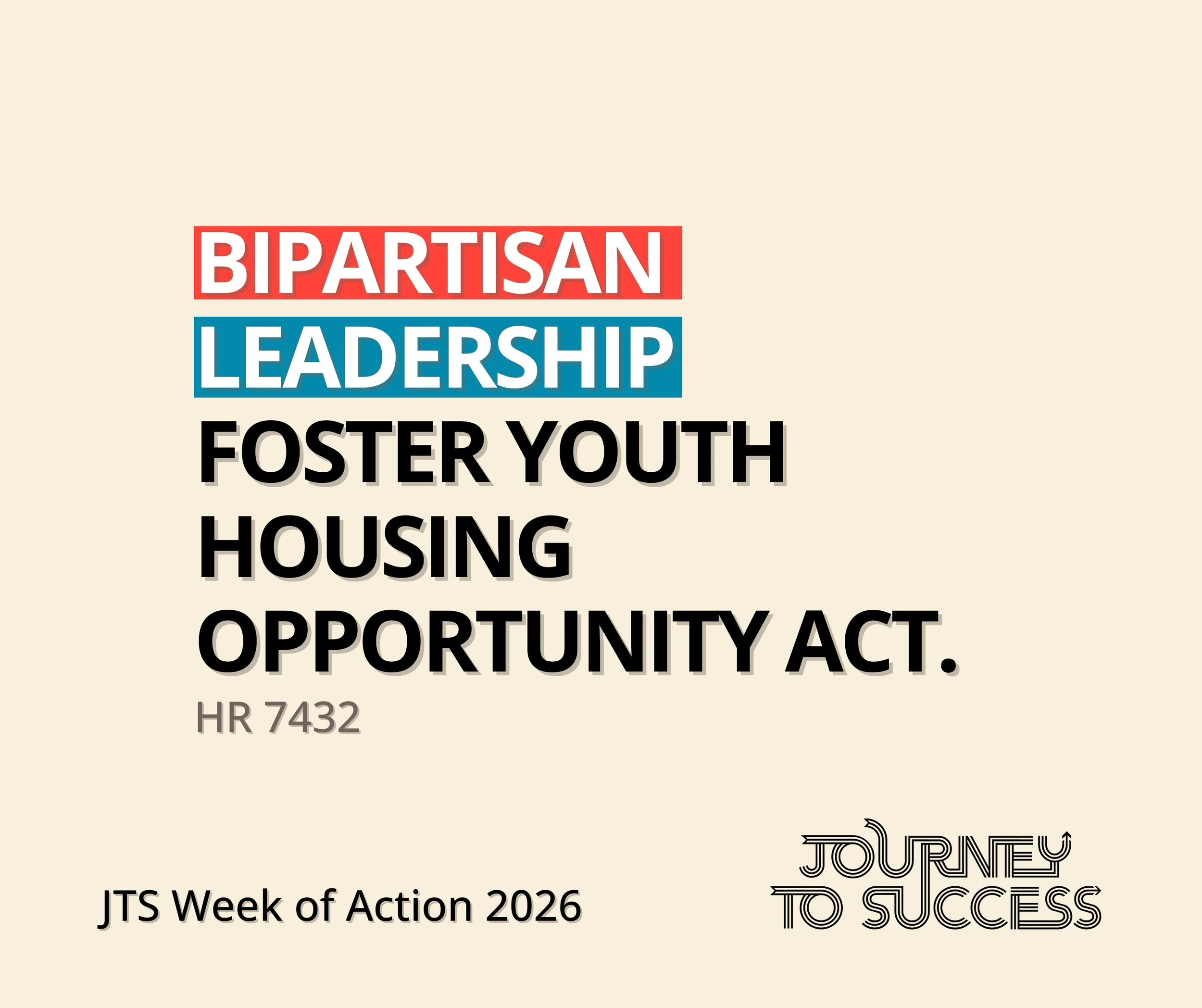
FOSTER YOUTH HOUSING OPPORTUNITY ACT
H.R. 7432 – Reps. LaHood & Moore
Suggested Captions:
CAPTION A: Strengthening Coordination
The Foster Youth Housing Opportunity Act improves coordination between HUD housing vouchers and child welfare systems.
Stronger alignment between housing and child welfare programs helps prevent youth homelessness.
Better coordination means fewer young people fall through the cracks.
CAPTION B: Chafee Housing Flexibility
The bill allows greater flexibility in how Chafee funds are used for housing-related services.
By adjusting the “room and board” cap and aligning age eligibility with FYI vouchers, this legislation strengthens housing stability.
Practical improvements to Chafee can make a measurable difference in preventing homelessness.
CAPTION C: Preventing Homelessness
Nearly 35% of former foster youth experience homelessness by age 21.
Stable housing is one of the biggest barriers -- and one of the biggest solutions -- to successful adulthood.
This bipartisan bill targets one of the most urgent transition challenges youth face.
CAPTION D: Bipartisan & Leadership Alignment
Introduced by Reps. Darin LaHood (R-IL) and Gwen Moore (D-WI), this legislation (HR 7432) reflects bipartisan commitment to foster youth success.
The bill builds on national efforts to strengthen the Foster Youth to Independence (FYI) initiative.
Housing stability is foundational to success in life.
Chafee Reform
Suggested Captions:
CAPTION A: Advance policy reform to improve Chafee awareness & access
The Chafee program was designed to help youth in foster care transition to adulthood, but too many young people never learn they’re eligible. Modernizing notification and outreach is essential.
Programs can’t work if youth don’t know they exist. Strengthening early notification ensures more young people access the support Congress intended.
Fewer than half of eligible youth receive Chafee services during their eligibility period. We can — and must — do better.
CAPTION B: Advance policy reforms that extend Chafee age eligibility to create stability and success for young people leaving foster care
Young adulthood doesn’t end at 21. Updating Chafee’s age eligibility to age 26 reflects the real timeline of education, workforce entry, and housing stability. Congress has already set this common-sense precedent by extending other supports for health care and housing through age 26.
Extending Chafee support promotes stability during a critical developmental window.
When youth are building careers and completing their education, consistent support matters.
CAPTION C: Advance policy reforms that support service coordination & navigation
Navigating housing, education, employment, and health care systems is complex. Chafee should better coordinate with workforce, housing, and education programs.
Stronger service coordination means fewer young people fall through the cracks.
Modernizing Chafee improves efficiency and outcomes at the same time.
ETV REform
Suggested Captions:
CAPTION A: Advance policy improvements to modernize the ETV program
The Education & Training Voucher (ETV) program hasn’t kept pace with today’s tuition, training costs, or career pathways.
A 21st-century economy requires a 21st-century ETV program.
Updating ETV ensures foster youth can pursue credentials that lead to good-paying jobs.
CAPTION B: Advance ETV policy reforms that deliver flexibility to program administrators and young people
Career success doesn’t look the same for everyone. ETV should support short-term credentials, apprenticeships, vocational training, and remedial education.
Flexible ETV funding opens doors to high-demand career pathways.
CAPTION C: Advance ETV reforms to improve access to the program
Simplifying ETV access, including adding a new grace period, helps youth stay on track during transitions.
Small administrative barriers can derail big educational goals. Reform can fix that.
No young person should lose support because of paperwork or timing challenges.
Foster Youth Driving
Suggested Captions:
CAPTION A: Advance policy reforms that nurture developmental milestones
A driver’s license is more than transportation -- it’s access to work, school, health care, and housing. And it’s an important form of identification.
Youth in foster care deserve the same rite of passage as their peers.
Driver’s education programs promote safety, independence, and opportunity.
CAPTION B: Advance policy reforms that promote economic mobility
Reliable transportation expands job options and earning potential.
Without a driver’s license, securing employment and stable housing becomes harder.
Data shows that youth in foster care with a learner’s permit or driver’s license are more likely to have their diploma or GED and more likely to be employed. Removing barriers to driver’s education supports long-term self-sufficiency.
CAPTION C: Advance policy reforms that build on state innovation
State initiatives like Keys to Independence show what’s possible when we prioritize mobility.
Federal policy can reinforce and expand successful state models.
Driving support is a practical, common-sense reform.
K-12 Education Success
Suggested Captions:
CAPTION A: Advance policy reforms that deliver academic support to promote educational success
Don’t lose youth before graduation. Clarifying that Chafee and ETV funds can support tutoring, credit recovery, and GED prep strengthens educational stability.
Post-secondary success begins with high school completion.
Targeted academic support can change lifetime earnings and employment outcomes.
CAPTION B: Advance policy reforms that create educational stability
Frequent school changes disrupt learning. Federal policy can reinforce stability and continuity.
Students in foster care deserve the same opportunity to succeed in school as their peers.
Education policy and child welfare policy must work together.
CAPTION C: Advance reforms that create bright futures for youth in (and leaving) foster care
A high school diploma significantly improves employment, earnings, and housing outcomes.
Investing in K-12 success reduces later system involvement and instability.
Education is prevention.
HOUSING STABILITY
Suggested Captions:
CAPTION A: Advance policy reforms that ensure housing stability
Education and employment goals depend on one essential factor: stable housing.
Youth leaving foster care face disproportionate risk of homelessness. Strengthening housing supports changes life trajectories.
Stable housing is not an extra — it’s foundational.
CAPTION B: Advance policies that strengthen coordination of FYI & other youth services
Programs like Fostering Youth to Independence (FYI) vouchers are powerful tools to prevent homelessness.
Stronger coordination between child welfare and housing agencies improves outcomes.
Housing vouchers work best when paired with supportive services like Chafee.
CAPTION C: Advance policy reforms that strengthen Extended Foster Care
Housing instability increases when youth age out without support. Without a safe, reliable place to sleep, it’s nearly impossible for young people to focus on their goals in school, work, and life.
Policies that reduce barriers to extended foster care promote smoother transitions to young adulthood.
A stable landing pad makes long-term success possible.
Graphics
When posting to Facebook or Instagram you may download and use these pre-sized social media graphics to ensure a clear and appropriate resolution in all your placements. Stay tuned to this space for additional graphics we may post to help elevate the campaign’s bipartisan agenda to improve federal programs serving youth in foster care.
Bipartisan Bills
WEEKS OF ACTION - 2026